Design education traditionally unfolds through dynamic, in-person mentorship and problem-based learning—it’s an iterative curriculum with a highly interactive pedagogy. Shifting this pedagogy into asynchronous, digital formats has exposed gaps—not just in engagement, but in connection. Many students report feeling unseen, partitioned behind what they call “the invisible wall.” The studio model struggles to translate when learning becomes spatially and socially fragmented.
This dissertation responds by creating a ThirdPlaceSpace (3rdPlSp): an assemblage-based, collaborative environment built through workshops, installations, and film, designed to break invisible barriers and open a forum of discourse between online (OL) and onsite (OS) creative students. Grounded in assemblage thinking, poststructural spatial theory, and knowledge-building frameworks, the study reimagines online design education as a co-created, relational process rather than a delivery system.
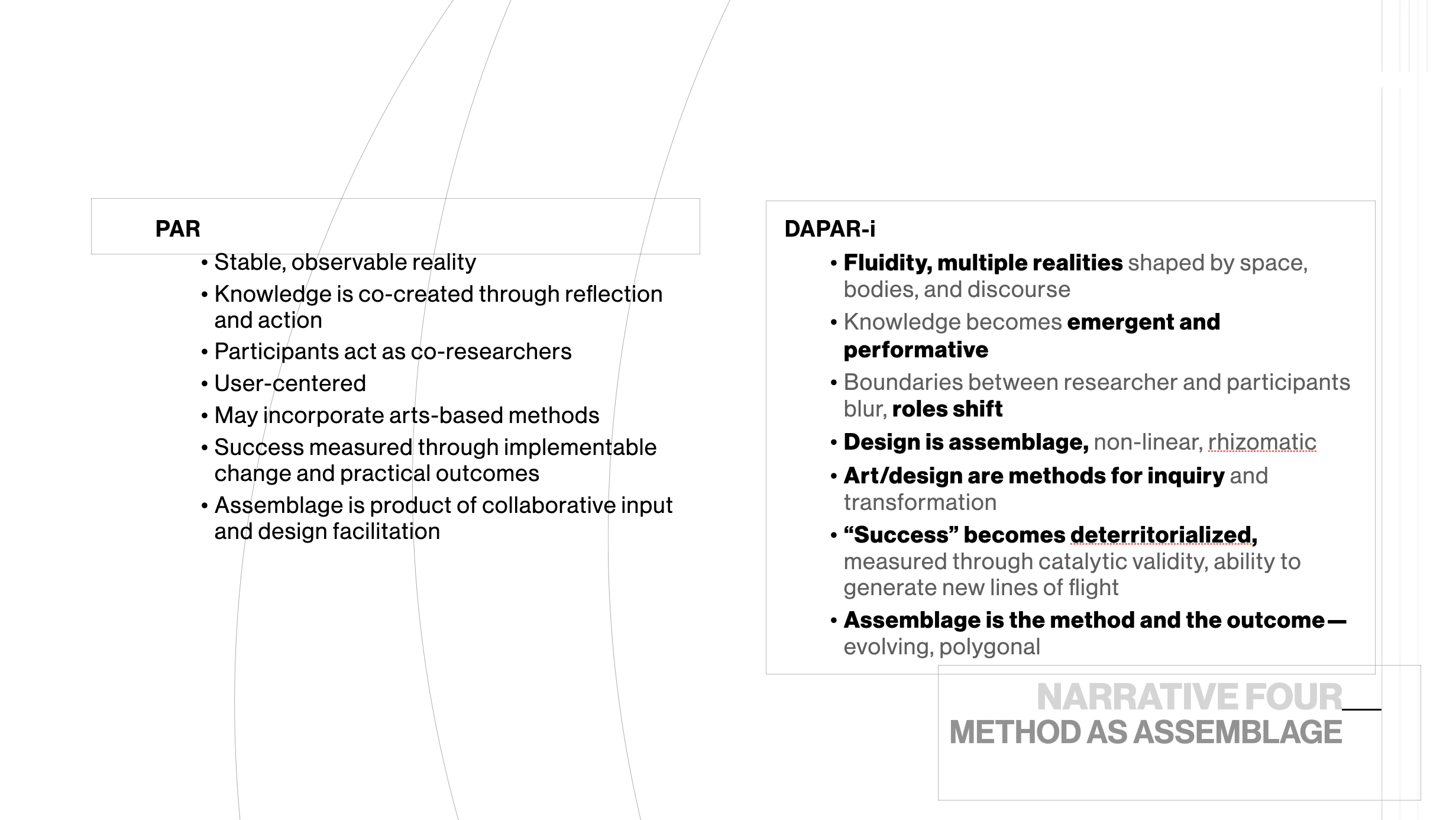
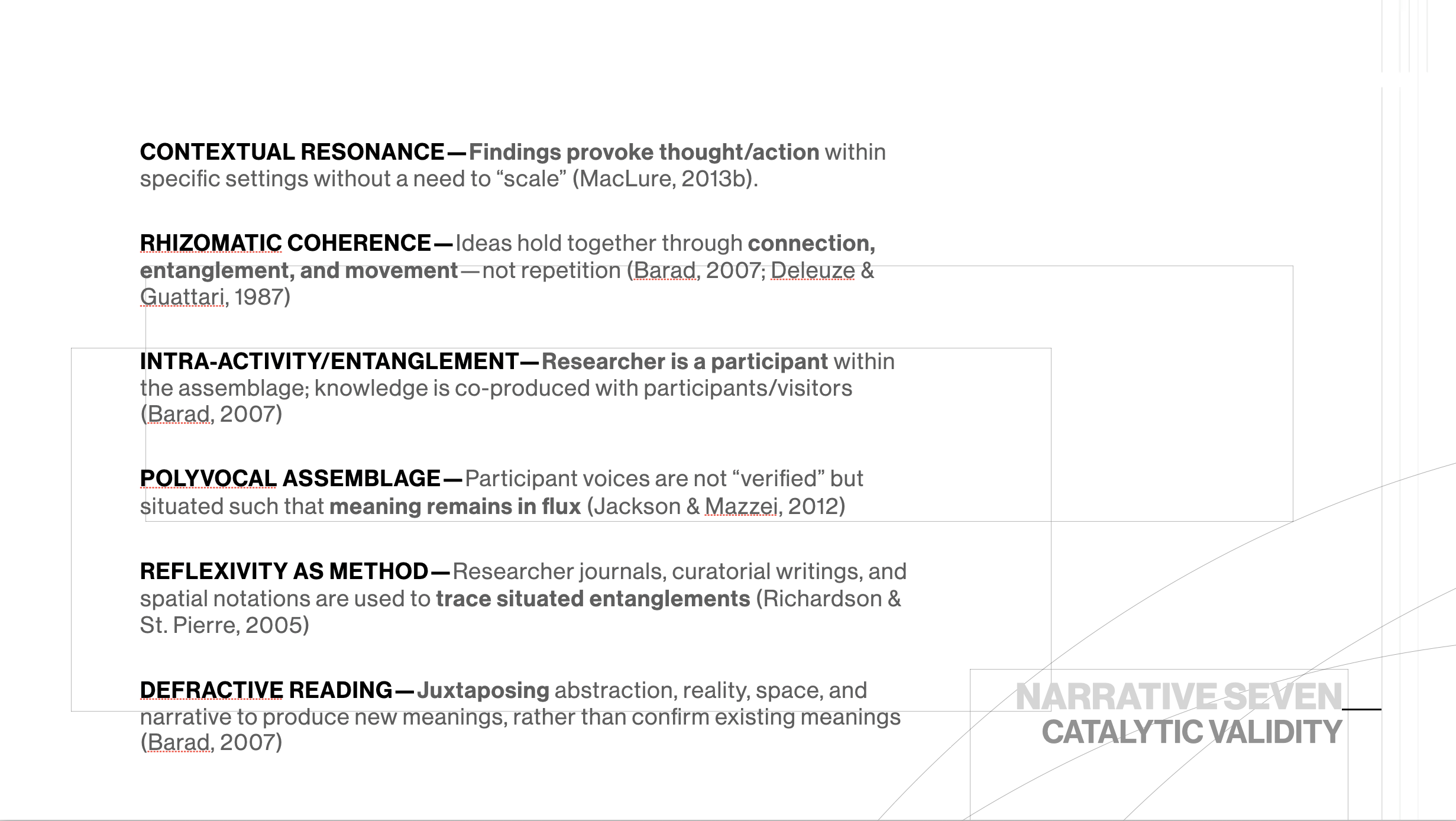
Using a hybrid arts-based methodology—blending rhizomatic narrative analysis with spatial design processes and visual semiotics—five design students collaborated to create three installations: a multi-sided kiosk, a shared-table exhibit, and a digital gallery. These spaces became narrative provocations—sites where stories, gestures, and objects shimmered with affective resonance. Peripheral moments, such as a sticky note left on a table or a paused glance during a Zoom call, became acts of meaning-making. This meaning helped define and strengthen the 3rdPlSp.
The following research questions guided this study:
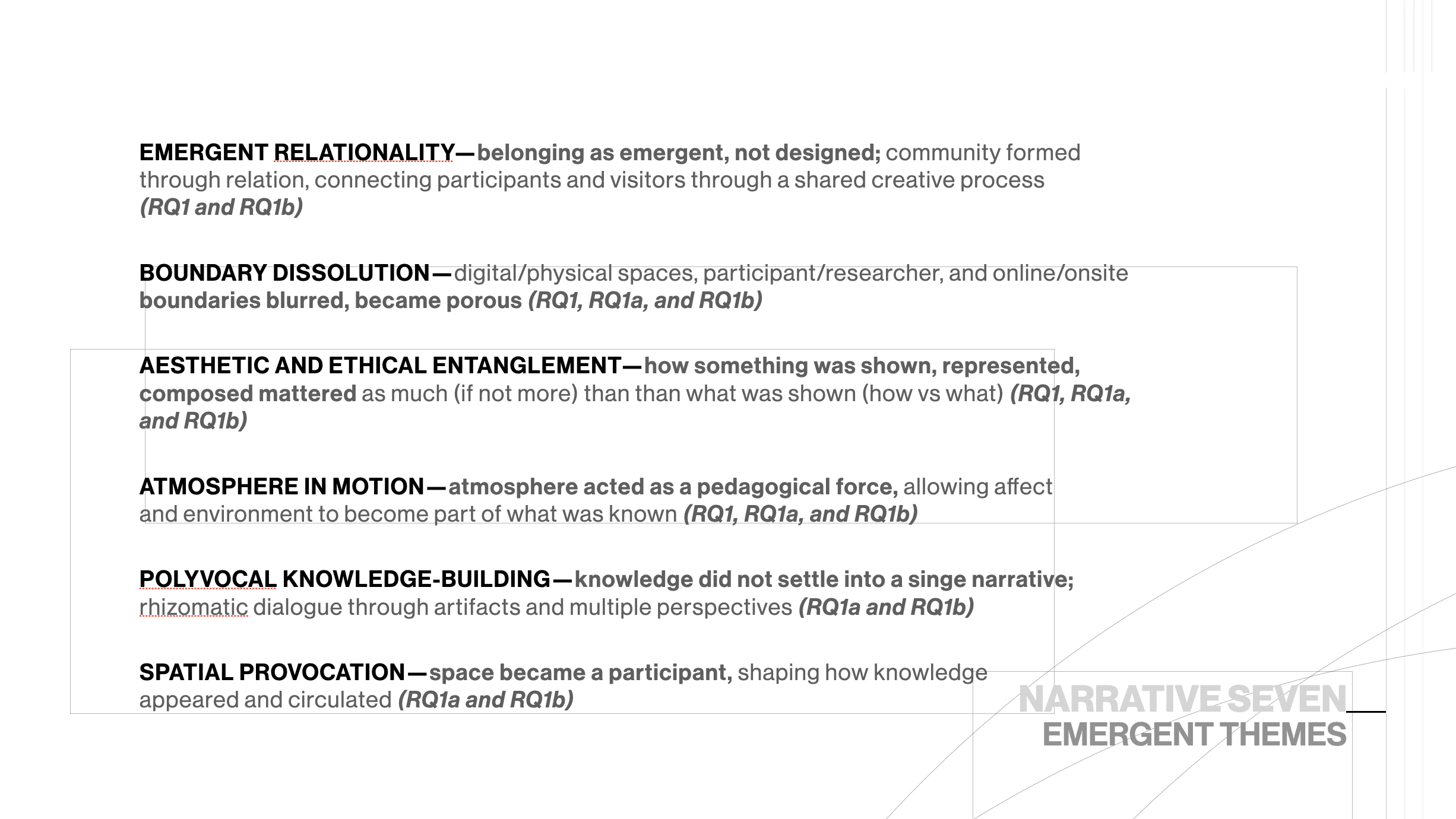
RQ1: What happens when students design a creative community space—physical, digital, or in-between—where learning/knowledge isn’t delivered, but co-created through stories, artifacts, and intra-action?
(a) How do ThirdPlaceSpaces work as assemblages that enable people—especially remote students—to deconstruct boundaries and build knowledge collaboratively?
(b) How do stories, interactions, and objects created in those assemblages reveal the emergence of meaning and community as they shift across different types of learning spaces?
Findings suggest that 3rdPlSps are not just settings but evolving practices of co-authorship and spatial care. The installations rendered participants visible; the film traced how relationships and community emerged through presence, not proximity. This work presents a flexible, relational model for design learning—and beyond—where stories and spaces become sites of shared transformation, both within and outside the classroom.